
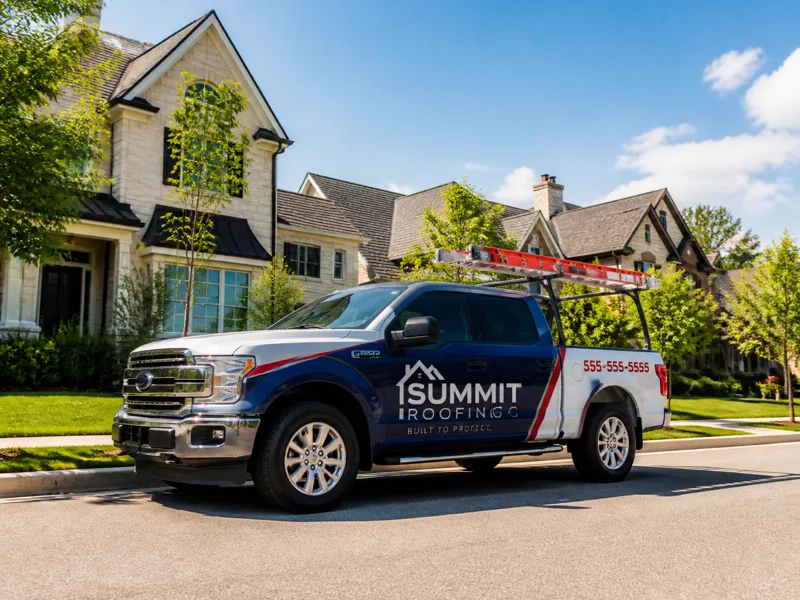
There is a neighborhood 20 minutes from your shop. You drive through it on the way to jobs. Old roofs everywhere.
Gutters pulling away from fascia. A few obvious storm hits that never got fixed properly.
That work exists. Those homeowners need a roofer. And right now, someone else is getting every one of those calls.
Not because they do better work. Because they show up first when those homeowners search.
Here is what actually stops roofers from getting that work. It is not what you think.
You do not need a second office, a second truck, or a second anything. This is not an overhead problem. It is a local SEO problem. Before you get into the fix, it helps to know what that term actually means and what it does not.
But before we get there — there is a good chance you have already tried to fix this and tried the wrong thing.
- •Added the neighboring town to your Google Business Profile service areas and waited for calls that never came
- •Built a city page for that town and watched it sit at the bottom of Google with zero traffic
- •Ran ads in that zip code and paid for clicks that did not turn into booked estimates
- •Asked a past customer who lives there for a review and hoped it would help — but had no idea if it did
- •Assumed you needed a physical address there to rank and filed the idea away for later
None of those are wrong ideas. A few of them are actually part of the right answer.
But executed without understanding how Google handles geography, they produce nothing.
Here is what actually moves the needle.
The Town Next Door Has the Same Problem You Solve
Homeowners in the next town over are not different from the ones you already serve.
They have the same aging shingles. The same ice dam damage in January. The same insurance claims sitting on the kitchen table after a hail storm.
The same anxiety about picking a roofer they can trust.
And they search the exact same way. They open Google and type "roofer near me" or "roof replacement [town name]." They look at the Maps Pack. They read reviews.
They click the name they recognize or the one with the most stars.
The only difference between them and your current customers is that you are not in front of them yet.
That is a positioning problem. Not a distance problem.
The roofer who is getting those jobs right now is not necessarily better than you. He just showed up first in search.
Because he showed up first, he got the call. Because he got the call, he got the estimate. Because he got the estimate, he got the job.
That sequence starts with search. Which means the place to fix it is search.
The good news: that town is not locked up. There is almost certainly no roofing company dominating it the way you should be dominating your home market.
The homeowners there are searching. The calls are available. The question is whether you show up when they do.
Why Adding That Town to Your Google Profile Won't Get You There
This is the part where most roofers waste the most time.
You log into your Google Business Profile. You find the service areas section. You add the neighboring town — maybe three or four towns while you are at it.
You save the changes. You wait.
Nothing happens.
Not because you did something wrong. Because that is not how Google works.
Google's own guidelines are clear on this. Your service area setting tells homeowners which areas you cover. It shapes what they see on your profile.
What it does not do is push your business into the search results for those areas.
Rankings in the Maps Pack are driven primarily by one thing. Not your service area. Your address.
Those are not the same thing.
The Maps Pack — that three-listing block at the top of every local search — is proximity-based. Google measures how close your verified business address is to the person searching.
No profile setting changes that.
That is the honest answer. And the honest answer leads to a better strategy.
Expanding into a new town often means new listings, too. If those do not match your existing name, address, and phone number exactly, you are not just failing to gain ground in the new town. You risk denting the trust signals for the market you already own. See how a mismatched listing quietly caps your visibility.
Here is what the difference actually looks like:
| Your GBP service area DOES this | Your GBP service area does NOT do this |
|---|---|
| Tells homeowners which areas you cover | Push you into Maps Pack results in that area |
| Shows on your profile listing | Replace proximity as the primary ranking signal |
| Updates within 48 hours | Substitute for a city page or targeted ads |
Your GBP service area DOES this: Tells homeowners which areas you cover
- Your GBP service area does NOT do this
Your GBP service area DOES this: Shows on your profile listing
- Your GBP service area does NOT do this
Your GBP service area DOES this: Updates within 48 hours
- Your GBP service area does NOT do this
This is not a reason to give up. It is a reason to stop doing the wrong thing and start doing the right ones.
The Maps Pack is where most of the calls come from — but it is not the only place that drives them.
The organic results below it are winnable from any address. AI search results are winnable. Local Services Ads are winnable.
Those are your doors into that market. And one of them can start working this week.
What Actually Works: Three Moves, in Order
There is no trick here. No loophole. No hack that gets you into a market overnight.
What there is: a sequence. Three things that work, in the order that makes them work.
- 01.
Build one real city page.
Not a template where you swapped the city name. A real page about roofing in that specific town. Reference the neighborhood. Mention the weather patterns that affect roofs there. Include photos from actual jobs you have done in that area. Write it for a homeowner in that town who wants to know whether you actually know their market. Google has a name for pages that are just city-swap duplicates: doorway pages. They get suppressed, not ranked. One genuine page built for a real person beats ten thin pages built for a search engine every time. - 02.
Run Local Services Ads targeting that town while the page matures.
City pages take time to rank. Ads do not. Local Services Ads let you set your service area by city, county, or zip code — and your listing appears to homeowners in that town right now. You only pay when someone contacts you directly through the ad. Roofing ads are not cheap. Expect to spend over $200 for every homeowner who reaches out. Track every contact back to a booked estimate before you scale. While your page is earning its rank, ads keep the phone ringing. Google is currently migrating this program into Performance Max, so check what is changing before you set up a new campaign. - 03.
Get reviews that name the town.
When a homeowner in Maplewood leaves a review that says 'replaced our roof in Maplewood after the hail storm' — Google can read that. It becomes a geographic relevance signal for your business in that area. According to BrightLocal's annual consumer survey, 97% of consumers read reviews before booking a local service. Reviews that mention a specific city carry more weight than five-star silence. After every job in the new market, ask for a review — and ask the customer to mention where the job was.
These three moves work together.
The city page builds your organic presence. The ads generate calls while you wait for it to rank. The reviews reinforce both — they signal relevance to Google and build trust with every homeowner who reads them before calling.
None of them require a second location. None of them require a second crew.
They require a clear strategy and the discipline to execute in the right order.
Expand One Market at a Time
Here is where roofers lose the plot.
They hear the strategy. They get excited. They build city pages for six towns at once. They spread their ad budget across four zip codes.
Six months later, they are not winning any of those markets. They spread everything too thin to win any one of them.
Geographic expansion is not a volume play. It is a depth play.
Pick the one town that makes the most sense. Maybe it is the one you already drive through on the way to jobs. Maybe it is the one where you have done two or three referrals and know the roof stock is old.
Maybe it is the one where your biggest competitor has no reviews and no presence.
That is the right town to go after first.
Build the page for that town. Run the ads in that town. Get the reviews from that town.
Make your name the one homeowners there recognize when they search for a roofer.
Then move to the next one.
This is how you build a market position that compounds. Each town you own makes the next one easier. Your reviews grow. Your name shows up in more searches across a wider area.
The roofer who owns three markets deeply is worth more than the one who dabbles in ten.
If you are already part of the system, this is not a decision you have to make alone or guess at. We watch for the signals that say you are ready, and we walk through the actual numbers with you before we ever suggest the next move.
There is also a window here worth understanding. Right now, in most suburban markets, no single roofing company has locked up the neighboring towns. The search presence is fragmented.
A roofer with a real city page and a handful of local reviews can move to the top of organic results faster than you might expect. The competition for that position is low.
That window will not stay open forever. The roofer down the street is going to figure this out.
The question is whether you get there first.
One town. Done right. Then the next.
►Does adding a city to my Google Business Profile service areas help me rank there?
No. Your service area setting tells homeowners which areas you cover — it shapes what they see on your profile. It does not push your business into the search results for those areas. Rankings in the Maps Pack are driven primarily by proximity to your verified business address. Changing your service areas will not change that. What does work: a genuine city page on your website, Local Services Ads targeting that area, and reviews from customers who mention the town by name.
►Can I show up in Google Maps for a town where I do not have an office?
For the Maps Pack — the three-listing block at the top of a local search — the honest answer is no. That placement is proximity-based. Your verified address determines where you are competitive in the pack, and no profile setting changes that. What you can win without an address in that town: the organic blue-link results below the pack, Local Services Ads, and AI search results. Those are real calls from real homeowners. They are worth going after.
►How many city pages should a roofing company have?
Only as many as you can build well. A roofing company with 20 thin city pages — identical copy with the town name swapped — will rank for none of them. Google treats those as doorway pages and suppresses them. A roofing company with three to five genuine pages — real local content, real job photos, real reviews from that area — will rank for all of them. Start with one. Build it properly. Add the next only when the first is showing up in search results for that town.
►How do I get reviews that help me rank in a specific area?
Ask every customer in that area to leave a review — and ask them to mention where the job was. A review that says 'replaced our roof in Springville after the hail storm' gives Google a geographic signal it can use. Send a simple text after the job wraps: 'Would you mind leaving us a Google review? It helps homeowners in Springville find us when they need roofing work.' That one sentence makes a real difference in how Google reads your relevance for that area.
The next town over is not out of reach. It is just not showing up for you yet in search. That is a fixable problem — and it is exactly the kind of problem the Search-to-Booked Roofing System™ is built to solve. We handle the city pages, the local presence, and the search visibility. You handle the roofing. One market at a time, starting with yours.
Expanding into the next town over is Phase 2 of the system. That is Pipeline.